Yes an exclusive. Nobody has ever published a photo of Mt Mutikonka (麦地贡嘎) before. That's because I was only the second person to ever see it [the first went on a rainy day in 1929 - not good enough for photos]
A 19,000 foot high mountain on the edge of the Yalong canyon in Sichuan, China, Mutikonka is the sacred yak spirit mountain to the local Pumi Tibetans. The lake is called ChangHaizi and is reputed to contain a Loch Ness style monster.
I sent a copy of this pic to the National Geographic but they weren't interested. So you can enjoy it here instead.
For the full story see the post below
Sunday, December 19, 2004
World's first picture of Mt Mutikonka (麦地贡嘎), China
The search for the lost mountain of Mutikonka (麦地贡嘎)

Zago Tsering, Pema and daughter Namu, at Mt Muti Konka
It didn't feel like we were setting off on an expedition to find a lost mountain in the remote Tibetan borderlands.
"Have you got my handbag? asked Pema in the back of the Landcruiser. "I've got something special for Aunty Nyima in it"
Pema was the wife of our expedition organiser, Zago Tsering, whose day job was director of education for this remote Sichuan county of Jiulong. Also along for the ride was their daughter Namu, a trendy student back from her medical studies in the big city of Chengdu, lamenting that she would be out of range of mobile phone coverage.
In fact, nothing about this trip to find the canyon of the Yalong river was turning out quite how I expected it to be. My plan had been to retrace the steps of an eccentric Austrian-American botanist, Joseph Rock, who had been the first – and only - westerner to visit this area back in 1929. When he made his crossing of the enormous Yalong canyon, he was mightily impressed by the landscape, concluding that area was “a scenic wonder of the world”:
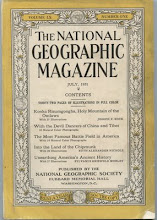
"The scenery hereabouts is overwhelming grand. Probably its like cannot be found elsewhere in the world. Where Muti Konka rears its eternally snow-capped crown 19,000 feet into the sky, the Yalung flows 12,000 feet below..." he wrote in the National Geographic.

These were remarkable words coming from the explorer whose writings went on to inspire James Hilton’s novel The Lost Horizon, which gave us the mythical Shangri La.
What really caught my imagination was his belief that the Yalong canyon would remain an impenetrable mystery into our modern era:
“For centuries it may remain a closed land, save to such privileged few as care to crawl like ants through its canyons of tropical heat and up its glaciers and passes in blinding snowstorms, carrying their food with them..."

And his prediction was correct. At the beginning of the 21st century, the Yalong canyon was still an unknown and unvisited area, a blank on the map. It was a challenge I could not resist. And thus, in October 2004, I set off to try rediscover this epic gorge and the fabled mountain of Muti Konka.

Jiulong
My first port of call was the town of Jiulong in mountainous western Sichuan, which Joseph Rock had described as so dreary that the resident Chinese magistrate could only bear to live there by spending his waking hours blind drunk. Like many small Chinese towns it was indeed a grim place and I felt like I needed a strong drink within minutes of getting off the bus.
Strangely enough, I soon found myself being offered one by the secretary of the local Communist Party in his office on the top floor of the highest building in town. I had been taken there to “seek permission” by Tony, a Chinese journalist I’d made friends with on the bus.
The party secretary, Mr Gao, was like a hyperactive version of Kim Il Sung, sitting in his executive leather chair, smoothing his paunch as he examined some photocopied articles and photos by Joseph Rock that I’d brought along. His office consisted of a grand desk, a drinks cabinet and a picture of Chairman Mao sellotaped to the wall. It all bore an uncanny similarity to the former Stasi headquarters I'd recently visited on a trip to Berlin. Except the Chinese Communists had decorated their building with fairy lights.
Expecting to be thrown out of his office – and probably out of his county – at any moment, I was not surprised when he opened the window and bawled downstairs to summon up a bearish Tibetan man to his office. Together they nodded gravely at a photograph of a remote village called Mundon and turned at me.
“Where did you get this?”
When I explained what the National Geographic magazine was, their eyebrows went up and they muttered something to each other. Then the burly Tibetan bloke came over and took me by the arm. Here we go, I thought.
He pointed a stubby finger at a Tibetan peasant in the photograph.
“See him on the right? That’s my grandfather. And that is my ancestral village. Why do you want to go there?”

The photograph of Mundon that started it all. Zago Tsering's grandfather is on the right.

A picture taken on the same spot of the modern day inhabitants of Mundon. They are Zago Tsering's cousins and uncle.
Our conversation continued over a meal at a local restaurant. As I politely nibbled at dishes containing things with beaks, claws and tentacles, I told them how the article described the Yalong gorge as a scenic wonder of the world. The conversation stopped and Mr Gao took out his notebook and began scribbling.

Chairman Gao gets excited about Joseph Rock's pictures of his county
“What else did he say about us?” he asked eagerly, writing it all down with his fountain pen. When I translated the bit about there being no scenery like it in the world, Gao banged the table in triumph.
“That’s our new tourism slogan!” he roared.
“Look at Shimian county down the road – they get thousands of tourists and what have they got? A few waterfalls and some wetland frogs! According to our foreign friend we’ve got ‘the best scenery in the world …”
“And our frogs are bigger than theirs,” added the Assistant Party Secretary, sat next to him.

Zago Tsering invites me to his restaurant to eat local delicacies.
By the end of the boozy evening the big Tibetan had introduced himself as Zago Tsering, former PLA soldier who was now head of the local Education Department. He raised a glass of the local rocket fuel to me in a toast and said: “We are brothers now. And I will take you to my home village this week. It’s a while since I visited the relatives…”

The track into the Yangwe kong was a challenge even for 4WD vehicles.
And so it was that I found myself being thrown around the interior of a Landcruiser, sharing the backseat with Mrs Tsering, her handbag and daughter Namu as we made our way along a dirt track over a mountain pass and into the dreaded valley known as Yangwe Kong. Chinese Tony had stayed behind, claiming altitude sickness.
As we crossed over a high pass into the Yangwe Kong valley, I wondered if it would be as gloomy as Joseph Rock described it:
“No outlook in any direction!” he wrote in his National Geographic article of 1929.
“Here people live and die without the slightest knowledge of the outside world! How oppressive to be buried alive in these vast canyon systems! Or are they happier for it?”

The people of the Yangwe Kong didn’t look too oppressed by their situation on my visit. They lived in solid-looking Tibetan style stone houses most of which had satellite TV dishes and with apple, orange and peach trees in their back yards. There were plentiful crops of maize and red chillis, and there were pigs, sheep and chickens running about the road. The climate was mild and dry – we might almost have been travelling down a remote Cretan valley.

A Pumi Tibetan house near the Yangwe Kong valley. Note the Buddhist swastika emblem.
When we stopped for a break I asked one of the local men if he was happy, and if he felt oppressed by the isolation.
“I like it here - you’ve got everything you need. Maize, barley wine, nice people … nice weather. I wouldn’t live anywhere else.”
So there’s your answer Mr Rock.
At the end of the road at the bottom of the valley, surrounded by some very daunting and pointy looking mountain peaks, we decamped from the Landcruiser into Zago’s uncle’s yellow house while horses were arranged to take us further. For those who are interested, a two bedroom house in this area can be had for $3000, including a courtyard for the cows and pigs and a handy roof terrace that can be used to dry maize stalks, chillis and for storing your coffin.

The view from uncle's roof, at the end of the Yangwe Kong valley.
Given that my only previous equine experience was riding a donkey along Scarborough beach some time in the late 1960s, I think I did quite well on the next stage of our expedition. To reach the hamlet of Mundon, high upon a ridge overlooking the Yalung river, we had to ride over one of those very pointy high mountains on a narrow zig-zagging trail. Then down the other side, and back up an even higher one.

We went down this and up the other side.
And having done so, I must say that horse riding is a very under-rated form of transport. Somewhat slow, granted, but reliable. Great all round views, they aren’t cancelled “for today only”, don’t get stuck in traffic jams, and apart from a few farts they are relatively environmentally friendly. OK, I never realised that horses sweat so much – but then I probably would too if I had to carry a 72kg man on my back up a 4000 metre high mountain.

It was dark by the time we were nearing the hamlet of Mundon, and we were riding along a wooded mountain ridge under the meagre light of a crescent moon. Somewhere far below there were a few lights, which I presumed were from houses along the Yalong river. It was like the view from a plane at night, though I was trying not to look down because I was terrified of even thinking about what might happen if the horse lost its footing and we went over the edge of the abyss.
When we finally arrived at some buildings, we were greeted by barking dogs and a grumpy old Tibetan man raised from his bed, muttering “Who the !@#$ is that?”. After shining a torch in our faces he unlocked the gate .
“Evening Zago. We haven’t seen you for about five years. You should visit more often,” he said.
Dinner. If you want to try the Tibetan Diet, here’s how to see if it’s for you. First make a big cup of milky strong tea and then put a big blob of salted butter into it and mix it in a blender [I’m not joking - modern Tibetans really do use blenders rather than the traditional old bucket and plunger method for making yak butter tea]. Sup this for a while and then add in some ground oatmeal until it has the consistency of wallpaper paste. Eat this with a sour cheese and some chilli sauce.
Or if you’re like me, just hold out for some roast potatoes.
After our late dinner, our group of Communist Party bigwig and family, horse handlers, villagers and one very saddle sore Yorkshire lad sat around on tiny stools in the sooty scullery, drinking maize-based rocket fuel and telling stories.
“If it wasn’t for me you’d still be here digging up spuds,” Zago taunted his wife.
“If it wasn’t for you we’d have been here half a day earlier. You’re way too fat for a horse to carry up these hills,” Namu teased her father.
Zago’s grandfather told us he well remembered the visit by Joseph Rock to their village. As a five year old he had been intrigued by the silent foreigner, and was curious to hear how he spoke. So when the explorer bedded down for the night, he and his older brother set fire to a few dry leaves to try startle him and provoke a few words. Unfortunately, this worked better than expected, burning a hole in Rock’s sleeping bag. He jumped up, shouting at them as they ran off to hide behind a nearby bush.

Some of Zago's older relatives remembered Joseph Rock's visit in the 1920s
Later, when acting as a guide, the young lad also tricked Rock out of his camera. Seeing it left hanging up on a tree branch, he hid it and then claimed a reward from the grateful explorer when he “found” it.
Perhaps it was the altitude or the booze, but I felt very dizzy and soon passed out after lying my head on a very itchy yak hair blanket.
I woke up with a very dry mouth but in excited anticipation of finally reaching my goal of the seeing the Yalong gorge, and the mountain, Muti Konka. In the cold dawn I sat on the balcony sipping my Nescafe while watching the sun’s rays light up the peaks of a mountain range across the canyon. Far below I could still see a string of lights that the previous night I had presumed were settlements along the river. The daylight revealed they were only halfway down the side of the gorge. This really was a bloody huge canyon!
My reverie was disturbed by Zago’s cheerful young cousin, who climbed up the notched tree trunk from the courtyard grasping a hapless chook. He slit its throat and poured the steaming dark blood out into a bowl like red wine from a casket.

In the sunlight I again found myself disagreeing with Joseph Rock’s comments, particularly his description of Mundon as a “dreary Hsifan hamlet”. It was a picturesque settlement of four houses and a Buddhist temple perched right on top of the gorge. Million dollar views, and very nice neighbours. The local people were Pumi, distant cousins of the Tibetans, Zago told me. He winced when I said Rock had called them the Hsifan people, an outdated term meaning hillbillies, he informed me.

After our breakfast of freshly throttled chicken stew with potatoes we bade farewell to the many relatives of Zago and set off again to climb up to the Wadzanran Pass. Well, the horses did the climbing, and the horse handlers sang Tibetan yodelling songs with increasing gusto the higher we got. I presumed their increasing enthusiasm had something to do with the flask of rocket fuel they were already passing round. By the end of the day they reeked of it and I wondered about the wisdom of their smoking while exhaling these fumes.
But for the time being, I felt like singing too. We already spectacular views down into the Yalong gorge, and they became ever more impressive as we ascended towards the 16,000 foot high Wadzanran pass.
Then as we skirted the ridge, a long snow-covered mountain ridge suddenly came into sight.
“Maidi Ganga” they all said. Muti Konka.
We sat down to rest on the tussock grass and I looked at this mountain for a long time. It was beautiful. Zago explained how it represented the mountain spirit of the yak, to local people. But no outsiders had visited it before or since Joseph Rock’s time.
“There have been more people on the moon than have come to this place,” he said.

Below the mountain was a pristine alpine lake, Chang Haizi, with a few houses dotted around its shore. According to one of the horse handlers, the lake contained a “strange creature” that he himself had seen 20 years earlier. A hairy beast with a head like a horse, he said, it had made large waves before plunging back into the depths of the turquoise waters.

That evening we stayed with one of the three Pumi families who made a living herding yaks along the shore of Chang Haizi. We stayed in their shack that consisted mainly of boulders and a roof of crude planks of woods held in place by large stones. Inside it was surprisingly clean and airy. We ate a local version of macaroni cheese made with yak cheese congealed on twigs in a kettle and mixed with green peppers.
After dinner the horse handlers sat around the fire and got stuck into the maize spirits, giggling uncontrollably in response to a joke based on mispronouncing the Pumi word for uncle as horse’s arse.
I had a moment of panic when I went outside to answer the call of nature, and found that when I turned around I had absolutely no idea where the house was in the total darkness. I was saved by their cat, which came out to investigate what I was doing and meowing, led me back to the house.
Back inside, Mrs Tsering had long ago ditched her handbag and was now giggling louder than the others. And stoking the fire, Namu seemed to have shifted effortlessly from her fey city ways back to her country roots. She moulded a piece of maize dough into a circle, buried it in the ash of the fire to bake into momo bread. When it was ready she dusted off the ash and handed it to me.

“Michael Shushu [uncle] … chi ba! [eat!]”
Around the fire, a glassy-eyed Zago asked me if I liked it here.
“Yes,” I replied. “I think Rock was right. It really is a scenic wonder of the world.”
He shook his head.
“Tai luohuo. Too backward. Too poor. When you get back to Australia you must make some good propaganda about this place. If more people come, the living standard of the local people will increase.”
I nodded but inwardly disagreed. I didn’t want to tell anyone else about this place. I wanted to keep it a secret.
However, I had started something I could not stop. A few days later when we had returned on horseback to the Yangwe Kong valley, we bumped into Mr Gao, the local Party chief again. He was holding court in the playground of a village school, addressing the teachers, local chiefs and villagers. Perhaps they had been expecting me.
“Mr Michael, please tell all the people what Mr Rock said about this area,” he commanded.
There were oohs and aaahs when the words of praise were translated. Everybody clapped. Then Mr Gao announced that the tractor track which currently constituted the only access to the valley was to be upgraded to a full road, that would allow ordinary cars – and buses into the area. There was more enthusiastic applause and cheers.
Out of nowehere I was suddenly approached by a Pumi woman dressed in the full traditional outfit of a fox fur hat, many layers of beads and colourful banded aprons. She clasped my hands in hers, holding a ceremonial cup of barley spirits. Then she sang a piercing Tibetan song of welcome, her voice ululating around the walls of the yard. Finally she placed a white silken kata scarf around my neck, the traditional Tibetan symbol of welcome. I was touched.
Afterwards, it seemed as if everyone in the village wanted to have their photograph taken with me, the first foreigner they had ever seen. “Xinku, xinku!” [“You are tough!”] they said.
I felt like a fraud. I had done nothing but ride in a car and sit on a horse for a few days, while every day these people did backbreaking toil - ploughing fields by hand and carrying heavy loads on their backs for miles to the nearest markets.
But again, it took Zago to explain things. I had apparently gained great merit by visiting their sacred mountain. And after years – centuries – of feeling cut off from the outside world, they were flattered that an outsider would make the effort to visit.
“Please come again. And bring lots of your friends next time,” they implored me.
Oh alright then. So now you know. Please visit Yangwe Kong. And it’s quite OK if you want to bring your handbag.
Saturday, December 18, 2004
Fresco at Konka Gompa [贡嘎寺], 1929
According to Joseph Rock this is a fresco on the wall of the Minya Konka Gompa [Gongga Shan, 贡嘎山] represents Dordjelutru, the mountain god, "who is believed to reside in the highest peak of Minya Konka".
Fresco at Konka Gompa [贡嘎寺], 1994
This painting was on the wall at the Minya Konka Gompa [贡嘎寺] when I visited in 1994. I don't know what it is. Any comments?
The Minya Konka monastery [贡嘎寺] in 1929
This is the same place as seen below. Compare the two buildings - they are similar but I suspect the lamasery has been rebuilt along the same lines. The old monastery was reportedly destroyed during the Cultural Revolution and rebuilt as seen below in 1980.
According to Rock it houses the fresco of the mountain god Dorje Lodro. Altitude 13,300 feet. The head monk at the time can be seen in the black and white picture further down this blog.
It's also interesting to note the position of the glacier in the valley behind the monastery - it doesn't seem to have receded much despite global warming
The Minya Konka monastery in the 1990s

This is the Gongga Gompa, the tiny lamasery perched above a glacier at the foot of the 7556m high Minya Konka or Gongga Shan.
Absolutely beautiful spot - and with great views of the mountain when it is clear - apparently. According to Joseph Rock it is cut off for about 3 months of the year by snows on the Tsemi La.
It can be reached from Kangding in a three day horse trek via Lao Yulin, overnight near Djesi La, the overnight at Yulongxi and via the Tsemi La. Try it!
Additional info [added 25/3/2005, from Tibetan Footprint guide by Gyurme Dorje]: The Gonga Gompa is a monastery of the Karma Kagyu school, with 20 monks [although I saw only three or four in residence]. The assembly hall contains images of White Tara, and Marpa flanked by Milarepa and Gampopa, and the present incumbent lama the Sixth Gangkar Rinpoche, who is currently studying in Bir near Dharamsala, India.
[The top picture was taken by my trekking companion, kiwi Keith Lyons]
Mosuo mother with children, 1925
This is actually the wife of the ruler of Yongning [永宁], a Mosuo town near Lugu Lake. The Mosuo are the now famous minority who practice "open marriages".
Pumi woman with baby, 2004
This is the lovely Namu with her baby cousin, in Jiulong [九龙], Sichuan two months ago. Actually Namu belongs to the Pumi minority, who are closely related to the Tibetans.
She doesn't usually dress like this!
Friday, December 17, 2004
Joseph Rock "洛克"
.Here is a picture of the man himself, dressed in Tibetan clothing. He is often portrayed as a bad tempered and imperious man, but that is not the impression I have gained from talking to people who have met him. On the contrary, they say he was a dignified, scholarly man who simply preferred his own company to that of others.
Watchtowers
This is a small settlement on the Kangding-Jiulong [康定-九龙] road, with some of the old watchtowers still standing. Compare it with the black and white picture below.
Thursday, December 16, 2004
West of Minya Konka 2004
This is typical of the beautiful scenery between Kangding and Jiulong. When the road branches south from the main Tibet-Sichuan highway at Xinduqiao [新都桥]it enters this serene valley populated by Minya Tibetans. There are many traditional Tibetan houses and watchtowers.
This was taken somewhere south of Shade [沙的].
West of Minya Konka 1929
This is the Chengzi valley, which runs to the west of Minya Konka (Gongga Shan) between Yulongxi and the Chiprin La (Pass).
It used to be the main travel route connecting Kangding with Yunnan but has now been supeceded by the Jiulong-Kangding road.
Some of the watchtowers are still standing [see above].
Mosuo women near Yongning [永宁] , 2003
These two very nice Mosuo ladies were at the Renjom Gompa near Yongning [永宁] in 2003, when I passed through on the way to Muli [木里]. The gompa is a tiny monastery just down a gorge along the river from Wujiao [屋脚]. There were two monks there as well. It was a beautiful spot, in an idyllic setting set below the Mount Gibboh pass. Will post some pics later.
Mosuo women 1924
These are "two wealthy Moso women of Yongning" [near Lugu Lake] photographed by Joseph Rock in 1924.
Yi family 1923
This a group of Yi people (the Nuosuo branch) at a place called Gtoh, "three days north of Lijiang" according to Joseph Rock.
Yi people 1999
Same century, slightly different dress. These are some Yi villagers at Lijiasun [利加村], half way between Yongning and Muli [see also the pic of the Yi lady below]. I don't think they'd seen many foreigners passing through, hence the stares.
Mt Chiburongi, near Gongga Shan
Compare this picture to the one below taken 72 years earlier.
This is the beautiful sight that awaits you if you walk up the valley from Kangding via Lao Yuling [老榆林] towards the Djesi Pass [加则拉] and Gongga Shan. I must warn you though that it's a day and a bit to get here and you have to overnight in a yak herder's tent.
I've no idea how high it is.
This is the fork in the trail, where turning right [as we have done here] takes you up over the Djesi pass and down to the Yulongxi [玉龙西] valley and ultimately over the next pass (Tsemi La, 次梅山口) to the Gongga Gompa monastery [贡嘎寺].
Plan B is to take the left route - the notch you can see to the left of the mountain, which takes you on a more direct route to the monastery [serious climbers only].
Mt Chiburongi 1929
And here is the picture that Joseph Rock took of the same mountain in 1929. Uncanny isn't it - we must have been stood in the same spot. You can read his comments for yourself.
Sunday, December 12, 2004
A very un-nomadic Tibetan girl
This is a bit of a cheat. I put it up to compare fur hats with the pic below. Namu is a very modern Tibetan girl - a med student in Chengdu, and only a nomad as far as her mobile phone will allow her to roam.
She got dressed up specially for these pics in Jiulong.
[And that's not her baby either, I should add ...]
Tibetan Reliquary shrine Muli, 1928
A copper gilt reliquary stupa containing the remains of the former Muli king, at the assemblty hal of Muli monastery.
Tibetan monk at Muli, 2003
This is one of the senior monks at the now restored Muli monastery, pictured during my visit in 2003.
Tibetan monk at Minya Konka, 1927
This man is the treasury of the small Konka Gompa monastery at the foot of the 7550 metre Minya Konka [now known as Gongga Shan].
Nanwu Si monastery, Kangding 2001
Compare this photo with the one below. This is the Nanwu Si monastery in Kangding - surely the same as the Dorjedra monastery described by Joseph Rock below.
If you look closely you can see it is either the same building with some slight modifications, or an exact replica/rebuild.
And while it looks to be set in an idyllic location, this monastery is now set back from a busy road just down from the local Nissan dealership and hidden from view by an ugly and insensitively sited high-rise army barracks.
The photograph is taken from the doorway where there is now a backpackers restaurant and hostel called Sally's Cafe. Actually, I think this view is also history because when I looked in during 2004 the whole place was closed for renovation and it looked like this facade had been completely demolished to be made even more grand.
Dorjedra monastery, Kangding 1927
According to Joseph Rock this is the main assembly hall of the Dorjedra monastery in Tachienlu, Kangding.
"Built of stone and decorated with great curtains of yak hair" is all he says about it.
Jambeyang in 2002
I visited the Yading National Park in Sichuan in spring of 2002. Despite being May we had cold snowy weather - at least the sky was clear!
This picture was taken from Luorong pasture, which has now become a popular camping spot for Chinese visitors. For many years people had tried to reach these peaks from Muli, which involved a difficult hike over the Shuiluo rover canyon and over the mountain pass via Garu.
Now it's all much easier as the Chinese have built a road in from the north, via Litang and Daocheng. The "bandit monastery" of Chonggu Si, once the shelter for a bunch of violent thieves, is now the visitor centre, with a tent hotel run by their succesors.
Jambeyang 1928
This is one of the three holy peaks of Konkaling - the range known then as Konka Risumgonba. It was visited and circumabulated by Joseph Rock in the late 1920s in the face of opposition from the local bandits. According to Rock, there was a small temple situated at the base of these three peaks, which housed a band of robbers who were also monks! hence his title: "Holy Mountain of the Outlaws".
Anyone who ventured within the realm of these forbidden mountains would be robbed shot dead by Trashi and his gang - "the scum of the outlaws" as Rock described them when he came face to face with them on his expedition. Rock survived the enounter because he had sought safe passage from the Muli king, who was the one person these rogues would respect.
I will post pictures of the other two mountains - Shenrezig and Chanadorje, when I have time.
Yi Woman in Wujiao
Half way between Yongning and Muli there is a small Mosuo/Pumi village called Wujiao. I stayed the night there before tacklling the Gibboh pass, and got to meet a few of the friendly locals. One of them was this Yi woman, who posed in her finest clothes, after a lot of persuading by me and the village chief. Compare her outfit with those of Yi women seen by Joseph Rock 75 years earlier:

Saturday, December 11, 2004
Young Muli monk
Muli [木里] 1994
This picture was taken from the same position as the one below. It shows how Muli monastery looked when I paid my first visit there in the spring of 1994. All of the original buildings have been destroyed, and the wall knocked down. The main temple had been rebuilt, as had the head lama's residence that had originally been at the top of the town. Some of the old ruins were still visible at this time. The locals said the monastery town had been knocked down in the 1950s - well before the Cultural Revolution, when the monks resisted communist power. The buidling s were systematically taken apart and used to build a new town across the valley, now called Wachang. The name Muli was also taken and used to describe the county town of Bowa, some 100km further down the Litang valley.
When I visited in 1994, there were about 40 novice monks, mostly local Pumi kids.
Muli [木里] 1925
This is the old "lama town" of Muli in Sichuan. In the late 1920s it was still a semi independent kingdom, ruled by a despotic lama king. There were almost a thousand yellow hat monks living in this town at the time, in a monsatery complex situated in a side valley above the Litang river. Joseph Rock paid several visits to Muli, where he befriended the king. He used Muli as a base for further expeditions to places like Daocheng-Yading (稻成-亚丁, Konkaling) and the mountain of Gongga Shan (贡嘎山 Minya Konka)
An old flintlock gun
This is Zago Tsering's cousin with an old matchlock rifle from the early 20th century. They were used for hunting and you would need to be a good shot because if you missed it would be at least a couple of minutes before you got the next shot loaded!
This was taken in Shantian, the Pumi village in the Yangwe Kong valley, some70km west of Jiulong
A Tibetan flintlock rifle, 1927
This picture was taken by Joseph Rock in the late 1920s of one of his Naxi personal guards in cermonial dress, with his matchlock rifle.
Wednesday, December 08, 2004
Yongning [永宁] 1926
This is Yongning monastery - the Zhamei Si [扎美寺] - in Yunnan province, as seen by Joseph Rock in 1926. He passed through here quite a lot on his way to Muli and became good friends with the Yongning, chief, one of the few Chinese he ever considered "civilised".
The monastery is about 20km north of the now popular Lugu Lake and on the outskirts of the small town of the Mosuo market town of Yongning.
Yongning (永宁) monastery 2003
I like comparing this photograph with the one above. This is Yongning monastery [Zhamei Si, 扎美寺] as it looked on my visit of summer 2003. The main temple has been rebuilt but if you look carefully the smaller building in front is the original.
There were very few monks in residence, although the catetakers told me there were usually 30 or so novices.
It took me some time to find the spot where Rock had taken his picture from - it was the corner of a hill, just near the road.
Kangwo Shan (抗窝山)
A pass of about 4000 metres between Jiulong [九龙]and the Yangwe Kong valley.
This was another mountain pass that Rock had crossed with great difficulty:
"We had already been informed at Deon Gomba, a tiny monastery recently looted by the Konkaling bandits, that the Druderon although not high, was snowed in and hence impassable. With an exhausted caravan it seemed hopeless."
The following morning when I looked out of my tent and beheld our camp almost buried and our animals shivering in the cold, I really feared for the shelterless men who had stayed behind with the exhausted mules. I also feared for the two of our soldiers who had braved the pass the evening before. They were to go to [Jiulong] to bring us yaks, which could plough a trail through the deep snow and help us across. The snowstorm continued for a short time; then the sun appeared. This was the last day of April, 1929.
In 2004, we were lucky to have clear weather and a car with a good driver.
Monday, December 06, 2004
Pilgrim 1929
This Buddhist pilgrim was photographed by Joseph Rock near Muli, while the man was prostrating his way to Lhasa.
Kangding [康定] Pilgrims 2004
These two Tibetan pilgrims were collecting money on the streets of Kangding in October 2004. They had made the traditional pilgrimage to Lhasa by prostrating themselves at every step and drawing themselves up again - hence the knee pads and clog gloves. Look for the grey callus on the forehead of the man on the left, the result of him touching his head on the ground (kow-towing) at every step.
It usually takes two-thre years to complete this pilgrimage.
By the way I gave then 10 kuai!
Friday, December 03, 2004
Wednesday, December 01, 2004
Tibetan hunter 1929
This Pumi man was photographed by Joseph Rock in 1929 by the banks of the Yalong river [雅砻江]. He is using a muzzle loading flintlock rifle - similar to one shown above in a recent picture.
Tibetan hunter, Sanyanlong, (三岩龙) 2004
This Pumi man was hunting with an old copy of a British 19th century rifle, near Sanyanlong (三岩龙).
Tibetan woman 2004
Namu's great aunt, Nyima. She's actually a lot happier than this when not posing for photos.
Tibetan woman 1929
This colour autochrome photograph was of a Draya woman taken in 1929 by Joseph Rock.
Mundon (猛董)
This is Mundon (猛董) village, at about 4500 metres, on the esatern edge of the Yalong canyon. The hills oppoosite are in Muli county. This picture was taken in October 2004, near to where the picture below was taken in 1929.
The Yalong Canyon [雅砻江]
This is how the botanist Joseph Rock described this area in 1929:
Through Mile High Cliffs The Yalung River Winds Its Tortuous Way
In the course of unnumbered centuries this great stream in western China has cut a gorge through thousands of feet of earth and rock. Its waters finally mingle of those of the Yangtze to complete their journey to the sea. This section of the Yalung gorge is to the northwest of Mutirong, in Muli territory.
Chang Haizi [Long Lake]
This lake is found at the foot of the mountain Maidi Gangga [麦地贡嘎] - or Muti Konka as Rock called it in his October 1930 article in the National Geographic. It is in a Tibetan area of Sichuan province, China. Watch out for the full story later.
Southwest China - the world of Joseph Rock [洛克]
His goal had been to reach the then unknown mountain of Minya Konka [Gongga Shan or 贡嘎山], which he believed might be higher than Mt Everest. But first he had to cross an enormous 9,000-foot deep canyon of the Yalong river [雅砻江], a journey that took him "five terrible days". After descending and then climbing out of this enormous gorge, he eventually reached a mountain pass on the eastern bank called Wadzanran, where the mountain scenery inspired him to write:
"The scenery hereabouts is overwhelming grand. Probably its like cannot be found elsewhere in the world. Where Muti Konka rears its eternally snow-capped crown 19,000 feet into the sky, the Yalung flows 12,000 feet below..."he wrote.
The pictures accompanying the article seemed to back up his claims, showing a narrow ribbon of river enclosed deep within a wooded canyon, and a maze of mountain ridges receding to the horizon.
"A scenic wonder of the world, this region is 45 days from the nearest railhead. For centuries it may remain a closed land, save to such privileged few as care to crawl like ants through its canyons of tropical heat and up its glaciers and
passes in blinding snowstorms, carrying their food with them..."
I was intrigued by these claims and tried to find out more about the canyon and its grand scenery. However, after consulting maps and guidebooks, and in subsequent years trawling the internet, I could find no mention of “Muti Konka” or the canyon. Joseph Rock seemed to have been right. It was still a closed land. And it became a challenge I could not resist.
One of the main reasons why the canyon remained unvisited was that since the Communist revolution in 1949 the surrounding areas of Jiulong [九龙] and Muli had been off limits to foreigners. Until the 1990s, they had been “closed areas” that required a special permit usually only granted to official groups on visits escorted by a Chinese government minder.
So, while I remained curious about Muti Konka, it remained in the back of my mind as I explored other little known areas of south west China that I had learnt about from other articles written by Joseph Rock. I made a hiking trip from Lugu Lake [泸沽湖] to the former semi-independent kingdom of Muli that Rock described in “Land of the Yellow Lama” [National Geographic April 1925]. Again, this was “off the map” and officially a closed area, but I discovered that Rock’s sketch maps were still reliable and that the local authorities in these out of the way areas did not seem concerned by the arrival on foot of a permit-less foreigner. Instead of being ejected, I was welcomed and treated as a curiousity.
The trip involved a hike over a high mountain pass into a great river valley, where a magnificent walled monastery complex had once stood on a hillside high overlooking the Litang river
There I discovered that the town of Muli, once the home of more than 700 monks, had been almost completely obliterated during the 1950s after the Chinese takeover. Its impressive buildings had not been smashed, but systematically taken apart brick by brick to be used in the constriction of a nearby village of Wachang [瓦厂]. The autocratic and idiosyncratic rule of the Buddhist monks – described in colourful detail by Rock - had been replaced with a functional settlement of breeze block buildings. And yet a few fragments of the monastery remained and were being restored when I visited, once again home to about 70 young monks. And across the mountains from Muli lay the Yalong canyon, so near, but still beyond my reach. The scale of the landscape was way beyond anything suggested by the empty spaces on the maps.
Emboldened by my initial success, I made other journeys throughout the nineties in the footsteps of Joseph Rock. From the Sichuan town of Kangding I rode on horseback into the isolated valleys surrounding the 7550 metre high peak of Gonga Shan [“Glories of the Minya Konka, NG October 1930]. Returning to the Muli area, the next year, I trekked the Buddhist pilgrim’s “kora” around the three sacred peaks of Yading 亚丁[Konka Risumgompa: Holy Mountain of the Outlaws; NG July 1931].
And in Yunnan I travelled from Lijiang to re-visit the great parallel river canyons of the Yangtze, Mekong and Salween in the north west of the province. There, I found that within the space of a 100km there was an amazing transition from the leech infested jungles of Burma, through temperate Yunnan forests up to the wild snowbound borders of Tibet [The Great River Trenches of Asia; August 1926].
On this blog you will find some of Rock's pictures and my modern day equivalents.